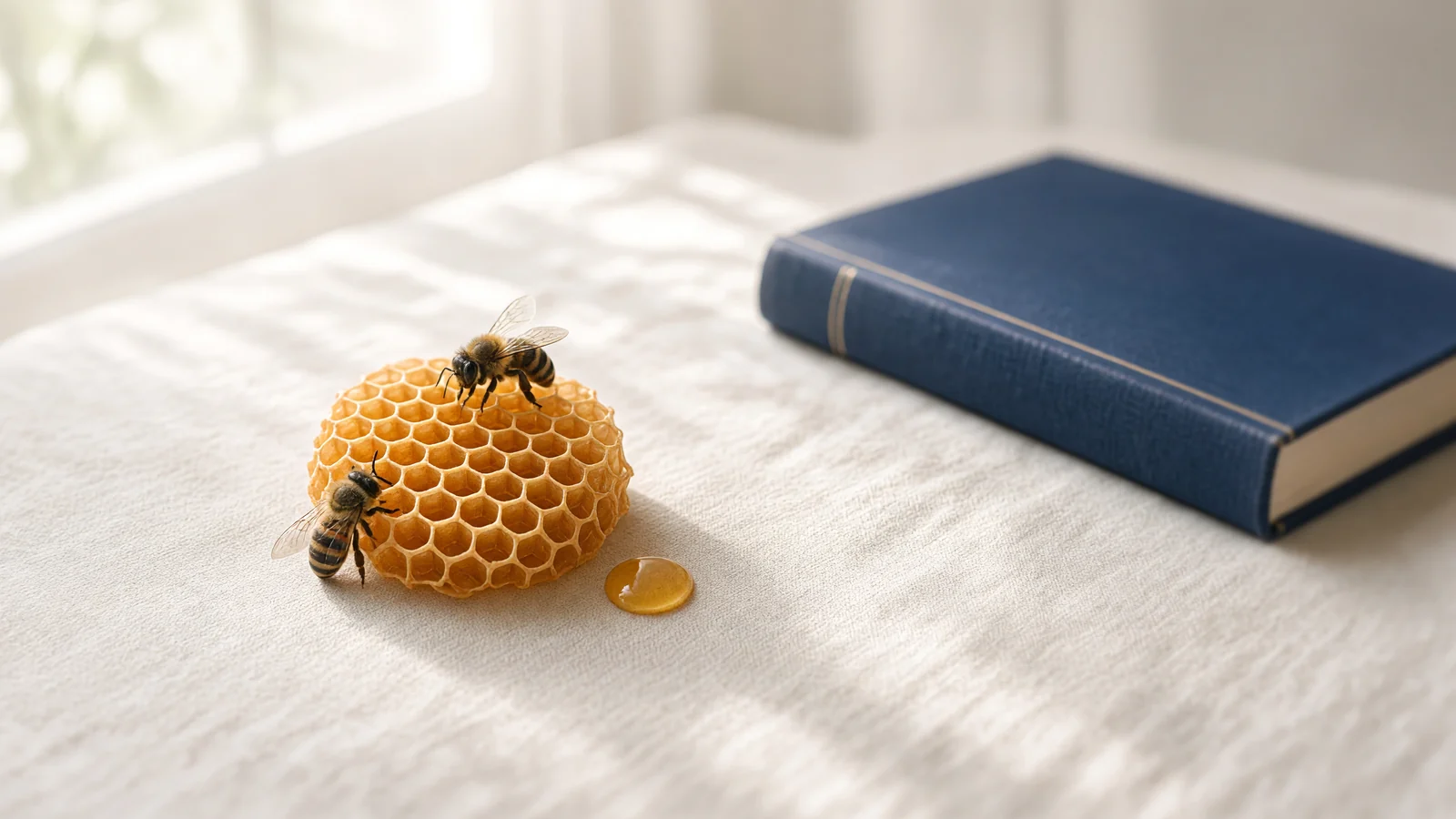
What bees symbolize in dreams
Few creatures carry a picture as clear as the bee. It lives in a crowd, follows strict order and turns flower nectar into honey. When bees show up in a dream, they usually stand for shared effort, discipline and a payoff that comes after patient work.
Traditional dream books lean sweet on this one. In popular tradition, the bee stands for honey and sugar: a life that gets sweeter, worries that drift off, and soon enough reasons to laugh. It is among the most hopeful readings in the whole dream dictionary, and it is a belief, not a prediction.
Three details shift the meaning. The first is quantity: one bee points to a single task or person, while many point to a whole setting such as the office or the family. The second is how the insects behave, whether they ignore you, defend themselves or attack. The third is your own feeling. Wonder and curiosity keep the scene light, while fear and running away suggest that everyday pressure is weighing on you.
Common bees dream scenarios
Bees attacking you
Being attacked by bees shows small demands piling up. Each one looks harmless, yet together they steal your calm: deadlines, messages, requests for favors. If you managed to escape or cover yourself, the dream suggests you already know how to set limits. Standing frozen in the middle of the attack asks for a firmer no.
A bee stinging you
A sting is quick, sharp and local. The most common reading ties it to a criticism or a harsh word that hurt more than it should have. It can also describe a gain that costs a small sacrifice, like taking honey from the hive and accepting the risk of the stinger. Compare this with a wasp dream, where the aggression takes over the whole scene.
Bees flying from flower to flower
Bees moving between blossoms bring a feeling of motion and output. Projects advance, routines pay off, and the people around you pull in the same direction. Many bees circling you without attacking suggest a busy stretch that is nonetheless well managed.
A swarm of bees
A swarm is a loud cloud that is hard to steer. It may mirror too many commitments at once, or a group of people acting as one block. If the swarm passed far away, the agitation belongs to others. If it came straight at you, it is a cue to sort out priorities. A whole hive, seen at once, reads in a similar way.
A big carpenter bee
A carpenter bee (called a mamangava in Brazil) is large, dark and heavy in flight. Its size scares people more than a regular bee does. Dreaming of one symbolizes a problem that looks bigger than it is: the noise is impressive, but it rarely turns into an attack.
The queen bee
In a hive the queen is the only fertile female and the center of everything. Seeing her brings themes of leadership, authority and someone who organizes other people’s lives, perhaps you. She is also tied to fertility and to projects that depend on one central person.
Bees in the house
Bees indoors carry work and worry into your private space. It can point to a very busy relative, or to your own exhaustion crowding out your rest. If the bees drifted back out through the window on their own, the hectic phase tends to pass. The setting matters too, so see also the symbolism of a house in dreams.
A bee caught in your hair
A bee tangled in your hair is a tense, very personal image. It often points to insistent thoughts, an idea that keeps buzzing in your head and will not let you settle. Lifting the bee out calmly, without a sting, shows you can handle anxiety when you slow down.
Bees and honey
Seeing honey, or tasting honey taken from the hive, is the sweetest version of this dream. It stands for reward, pleasure after effort and, in folk tradition, a sign of joy ahead. Other buzzing insects tell a different story, such as an ant dream, which leans toward routine and teamwork rather than sweetness.
Killing a bee
Killing a bee speaks of defense and impatience. You rid yourself of an annoyance, though maybe with more force than the situation called for. If guilt followed, the dream may be nudging you to revisit a harsh reaction toward someone.
Good sign or warning?
Most readings lean positive. Bees recall productive work, cooperation and honey as a reward, and calm bees usually mean a steady, fruitful stretch. Folk dream books treat bees tied to honey as a good sign.
The tone turns cautionary only when bees sting or swarm, and even then the message is about small, manageable irritations rather than serious trouble. In folk tradition stings are passing setbacks. This dream is not a forecast. If you have a real fear of bees, the dream may simply be replaying that fear with no hidden message.