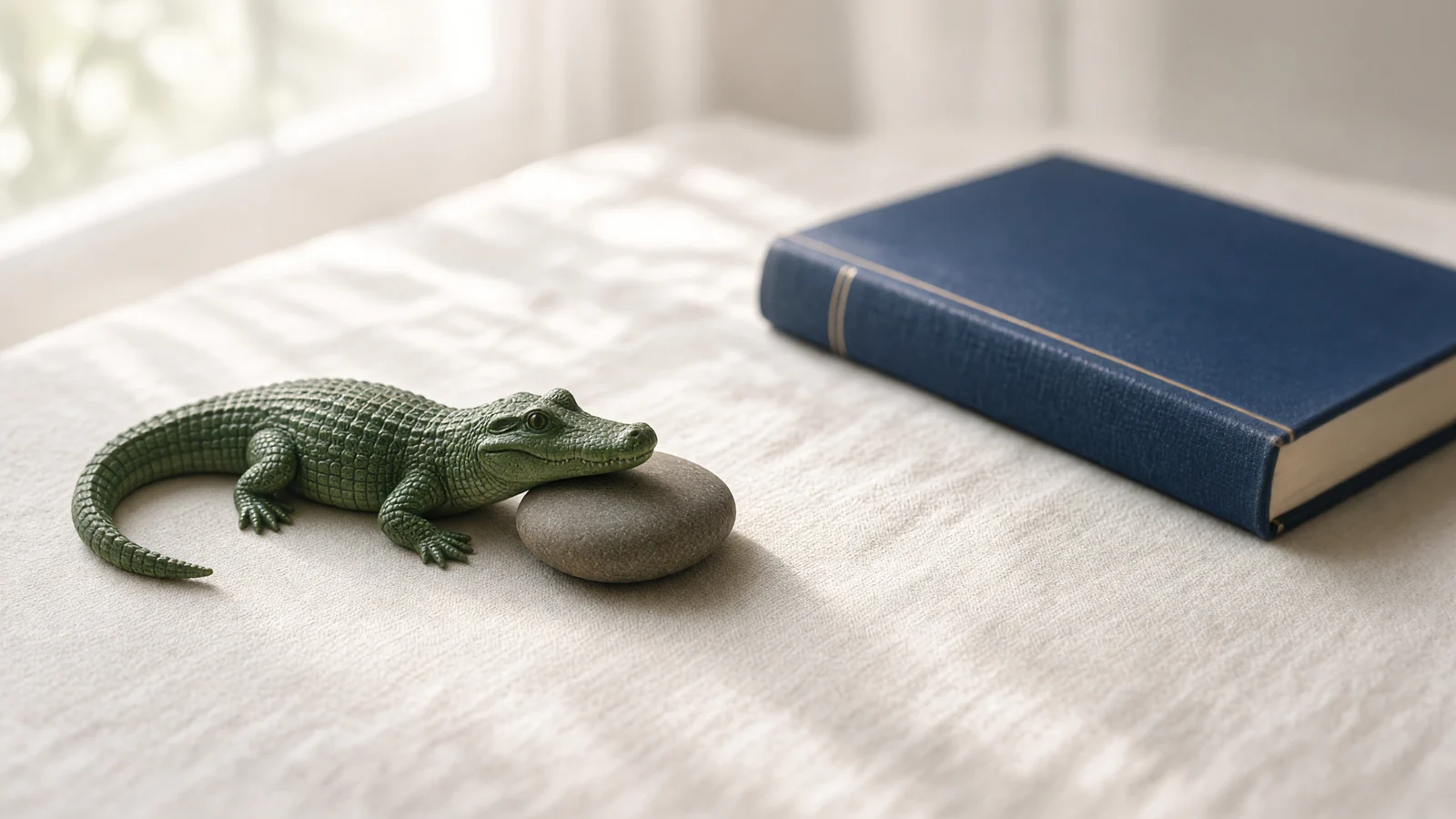
What an alligator symbolizes in dreams
An alligator is a creature of stillness and sudden speed. It floats like a log, only its eyes showing, and then it moves. In a dream, that pairing points to something that looks quiet on the surface but is waiting to be noticed: a threat, a chance, or a strength of your own that you keep submerged until it is needed.
Traditional dream books lean in two directions. Some read the alligator as a bringer of good news and a short journey, especially by water, a sign that something in your life is about to shift position. Others treat it as an enemy lying in wait. Both readings agree on one thing: the animal’s behavior in the dream matters more than the animal itself.
A calm alligator watched from a distance usually reads as prudence and patience. One that attacks, chases or invades your home points to fear of betrayal, conflict, or a problem you have been avoiding. Whether you fled, stood your ground or simply watched completes the picture.
In depth psychology, reptiles stand for the oldest, most instinctive layers of the mind, the part that acts before thought. So an alligator can stand for primitive fear, held-back anger or an impulse asking to be acknowledged, rather than for a dangerous person in your life. Its cousin, the crocodile, carries a related but distinct set of readings.
Common alligator dream scenarios
Dreaming of a big alligator
A giant alligator magnifies the matter at hand. The dream often points to a problem or challenge that feels larger than you are, yet one that can bring real gain if you meet it calmly. A huge alligator lying still is read as power worthy of respect; one that advances suggests it is time to act rather than wait.
Alligator in the water
Water is the alligator’s home turf. In a clear river or lake, the scene reads as emotions held in check and opportunities that reward patience. In murky, muddy water, as in a mud dream, the image shifts toward distrust: something is clouded, and you cannot yet see it clearly.
Alligators in my house
An alligator indoors brings danger close to home. This dream can mirror family tension, guests who wear on you, or a sense that someone near you is less trustworthy than they appear. It can also show an old fear that has moved into your everyday life and now sits in the living room.
Alligator chasing you
Being pursued is a flight scene, much like other being chased dreams. The animal on your heels stands for something you are dodging, perhaps a hard conversation or a money worry, and it is closing in. If it wanted you but never caught you, traditional readings call that a victory over difficulties.
Alligator attacking you or someone else
The strike of an alligator, aimed at you or at another person, is an image of unexpected attack. It speaks to fear of betrayal, harsh criticism or sudden loss. If you got away, the dream leans toward quick reaction and recovery. Pay attention to who was targeted, since that often shows where the worry really sits.
Many alligators
A group of alligators paints a landscape full of risk, or the feeling of being surrounded by people waiting for you to slip. It can also represent a pile of tasks arriving at once, each one demanding your full attention before the next snaps shut.
Killing an alligator
Killing the alligator is among the most favorable versions. The tone is overcoming: a fear defeated, a rival driven off, a problem solved with courage. If the fight dragged on, the dream acknowledges the effort you are putting in right now.
Baby alligator
A baby alligator looks harmless, but it grows. The dream often flags small problems worth handling today, before they get bigger. It can also describe a fragile new project that still needs careful tending.
White alligator
A white alligator is rare and stops you in your tracks. Traditional readings take the color as protection and peace, a warning that arrives wrapped in calm. It may point to a delicate situation that resolves well.
Good sign or warning?
It can be either, and the details decide. In the old dream-book tradition, the alligator brings news and a trip, a hopeful sign of movement. A calm, distant animal, or one you overcame, tends to land on the positive side: patience, hidden strength, a fear mastered.
An alligator that bites, chases or enters your home leans toward warning: a problem postponed, a relationship that feels unsafe, anger pressing for release. Treat the dream as a prompt to look at what you have been avoiding, not as a verdict. Writing down how you felt and what you did in the scene is the quickest way to tell which reading fits.